
When Brands Borrow From Cultural Movements, Why Does It Sometimes Backfire



A few years ago I wrote an essay looking at how brands use cultural movements as a method of persuasion in their advertising, and whether it actually works. I'm revisiting it here because I think the comparison still holds up, and it's a useful lens for anyone thinking about how to handle culturally sensitive topics in brand work.
The argument I made was that using culturally significant movements as a method of persuasion will often result in an unsuccessful promotion, because it undermines the complexity of the issue at hand and forgoes the actual function of selling a product. I explored this through two examples that sit on opposite ends of the outcome, Gillette's 2019 "We Believe" ad and Airbnb's 2017 "We Accept" ad, and through the thinking of Douglas Holt and separately Gardner and Levy.
Gillette and the cost of inauthentic activism
Gillette released their ad in 2019 during the popularisation of the MeToo movement, a hashtag and movement that had become widely used to raise awareness about victims of sexual assault. The ad featured clips of men engaging in what would be regarded as toxic masculinity, scenes of men harassing women in the workplace, bullying, and catcalling, paired with a voiceover calling out men to challenge these behaviours. Notably, not once was a razor featured in the entire advertisement.
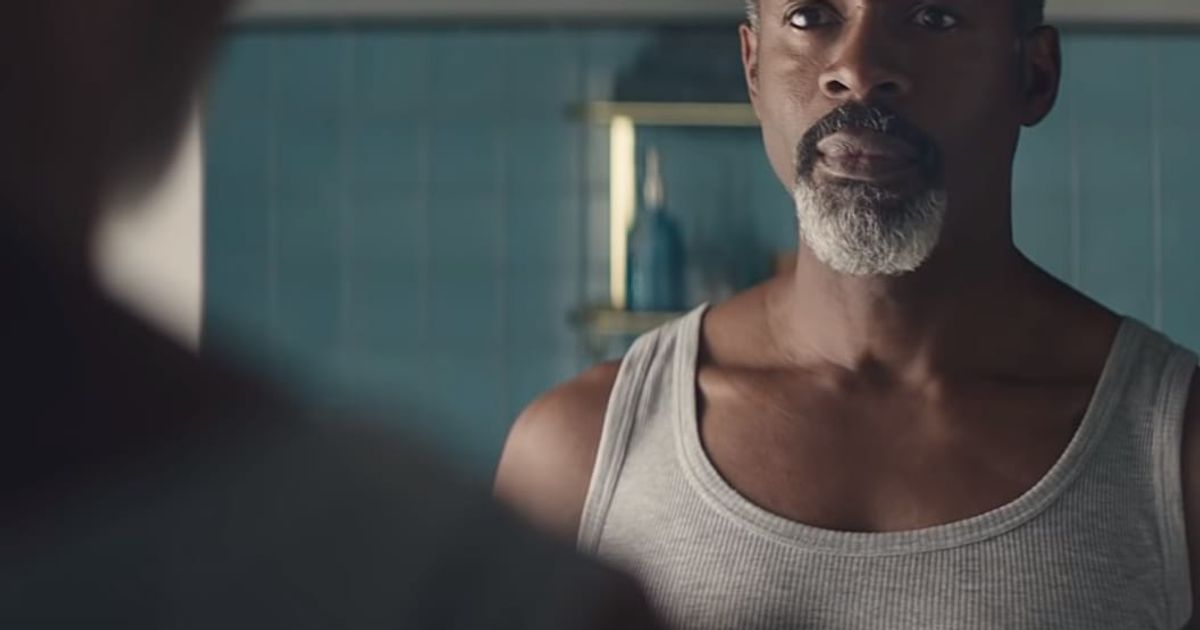
The ad faced a lot of backlash from its main target audience, with many questioning why a razor brand was inserting itself into the debate at all. Many men found the ad offensive and an unfair judgement of their gender.
This is where Douglas Holt's thinking on cultural branding is useful. Holt argued that most brands are organised to act as cultural reactionaries, whose practices are the opposite of the activism that's required. What this means is that brands tend to understand the importance of connecting to consumer values as a persuasion tactic, but fail to add anything meaningful to the actual cultural discourse, and end up looking like they're taking advantage of a sensitive issue instead. Holt's argument was that to succeed at branding through cultural activism, a brand needs what he calls cultural knowledge, an understanding of major social changes, and of how class, gender and ethnicity actually interact within society.
Gillette did show some cultural knowledge just by making an ad that responded to the MeToo moment at all. But they failed to understand the values and perspective of their own target audience. During that period, a common response from men to the feminist discourse was "not all men." The ad's framing, built around the question "is this the best a man can get," used signs of the everyday man, barbecues, fathers and sons, men in the workplace, to make clear this was about ordinary men, not just bad actors. But by essentially asking all men to be better, without acknowledging that men were already feeling persecuted by the broader MeToo discourse, the ad alienated the exact people it was made for.
There's a counterpoint worth taking seriously here though. It can be argued that Gillette did in fact have extensive cultural knowledge and used it well. While men felt alienated, the ad was widely praised by women, many calling it an important and meaningful message. Gillette has held a large market share in razors for a long time, and a brand at that scale doesn't fund, produce and distribute a full ad campaign without real understanding of its customer base. Worth noting too that while men are the primary product users, research from the Pew Research Centre and Bureau of Labour Statistics found that around 80 percent of women are responsible for groceries and household purchase decisions. With that lens, Gillette may have been appealing directly to the people most likely to actually be buying the product, not the people using it. That reframes the ad as a potentially successful piece of targeting, not a failed one.
Even so, I think the more accurate read is that regardless of who the ad was really aimed at, it didn't provide relevant or authentic discourse to the MeToo movement. It mostly polarised groups that were already in conflict. That's the bigger issue. A brand's promotional activity tied itself to a live cultural movement and the net effect was more division, not less, which undercuts Holt's idea of authentic activism and starts to look more like using a sensitive issue for commercial gain.
Airbnb and the case for subtlety
To look at the other side of this, I want to bring in the Airbnb "We Accept" ad, which I'd argue was actually successful in persuading consumers, despite also leaning on cultural movements and activism. This one's worth reading through Gardner and Levy's thinking instead of Holt's.
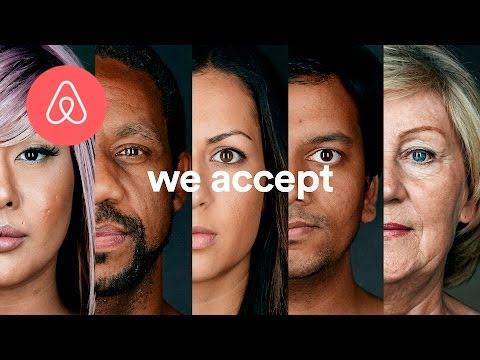
Airbnb released "We Accept" in 2017, during Trump's presidency. The ad featured text praising diversity and inclusivity over a montage of faces, diverse in age, gender and ethnicity, almost as if showing the face of their actual customer base. The message was simple: everyone is welcome regardless of background. On the surface this is on-brand messaging for a travel company. But the timing also lines up with something specific. In 2017, Trump imposed a travel ban restricting people from six Muslim-majority countries from entering the US, which understandably caused major outrage and sparked conversations about Islamophobia and xenophobia. So this ad landed at a moment when diversity, as a topic, was especially culturally loaded.
Gardner and Levy's framework is useful here because they argued that consumers don't act on just one motive when buying a product. There are superficial motives, complex motives, and motives tied to public image, all working together. Public image specifically is the body of associations a brand has built up over time as a public object. Consumers make purchases partly based on the image they want to project for themselves, so a brand has to factor that motive into its promotional decisions.
With Airbnb, the success of the ad comes down to understanding that customers engage with the brand for more than just finding a place to stay. By connecting itself to an issue of social injustice and taking a stance, Airbnb built an image of diversity into the brand itself, and Gardner and Levy's thinking explains why that appeal to values actually persuades people to engage with the product, not despite the cultural messaging but because of it.
Why one worked and the other didn't
If the core argument is that culturally influenced promotions tend to fail, the obvious question is how Airbnb managed to succeed. I think the key difference comes down to subtlety. Airbnb let the audience fill in the blanks. The line in the ad, "where you are from, who you love and who you worship, we all belong," reads as a fairly generic statement about travel and diversity on its own. It only connects clearly to the political moment if you already understand the context it was released in. The ad was never blatantly anti-Trump, but anyone paying attention to the timing could draw that line themselves. That ambiguity left very little room for backlash or polarisation.
Compare that to Gillette, which referenced MeToo explicitly while never connecting it back to the actual product, razors. That contrast suggests a more useful version of the original argument. When a brand wants to engage with a cultural movement, it has to do so subtly, and it has to stay relevant to the actual product, or it risks undermining the movement itself and alienating parts of its own audience in the process.
Brands will keep being shaped by social and cultural context, that's not avoidable. But to actually succeed at persuasion rather than just generating noise, the cultural reference has to stay tethered to the brand and the product, and it has to be handled with a level of subtlety. Otherwise you end up polarising the exact people you needed to bring along, and doing real damage to the credibility of the movement you were trying to borrow from.
More from the studio
Explore our latest thinking on design and strategy


Have a project in mind?
Fill out the form and we'll be in touch within 72 hours
